
I’ve been mixing protein powder into shakes for the past eight years. I’ve tried 27 different brands—from cheap grocery store tubs to $80-per-bag boutique blends that promised to “transform my cellular health” or whatever.
Here’s what nobody tells you: most meal replacement shakes are either glorified sugar bombs wrapped in health claims, or they taste like chalk mixed with sadness and optimism.
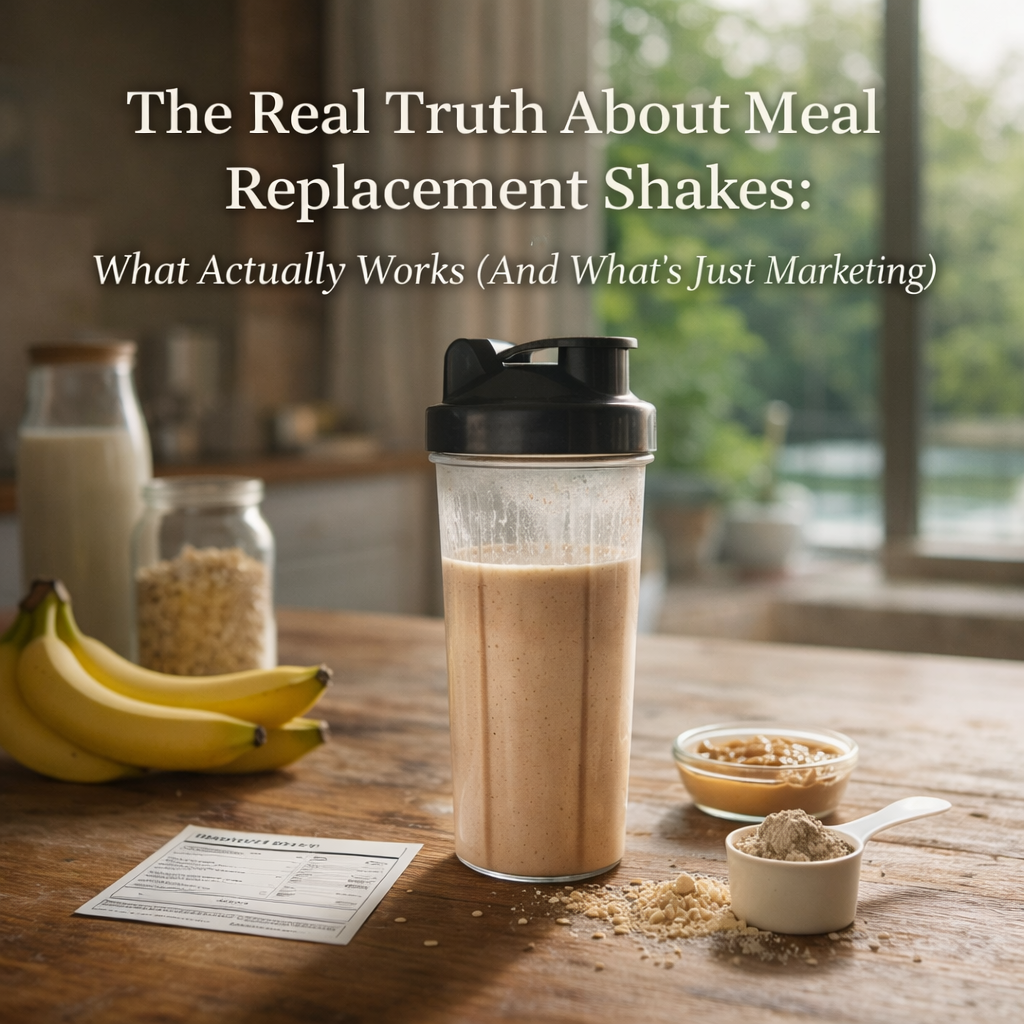
But some—the rare ones that actually get it right—can genuinely change how you eat, feel, and move through your day. I found three that worked. Two I stuck with long-term. One became my actual breakfast for two years straight.
Let me share everything I’ve learned about what makes a meal replacement shake actually good, how to spot the garbage hiding behind clever marketing, and how to build a sustainable nutrition routine that doesn’t require you to cook three meals a day or feel guilty about convenience.
Why Meal Replacement Shakes Even Exist
We need to start here because the entire category is confusing.
Meal replacement shakes aren’t for bodybuilders trying to bulk up. They’re not diet products (though companies love marketing them that way). They’re not magical supplements that fix broken metabolisms.
They’re tools for a specific problem: you need proper nutrition but don’t have time, energy, or ability to prepare a balanced meal right now.
Three situations where meal replacements make sense:
Mornings when you’re rushed. You know you should eat breakfast. You also know you have 12 minutes before you need to leave. A shake takes 30 seconds to mix and can be consumed while getting dressed.
Workday lunches when you’re busy. The alternative is either skipping lunch (bad) or eating whatever’s convenient (usually worse). A properly formulated shake provides balanced nutrition without the hour-long break.
Recovery days when cooking feels impossible. Whether you’re sick, exhausted from travel, or just burned out, some days cooking is too much. Having a nutrition baseline matters.
Notice what’s missing from that list? “Replacing every meal to lose weight fast” or “building massive muscle” or “detoxing your liver.”
If someone’s selling meal replacements for those purposes, walk away. They’re either lying or dangerously uninformed.
What Your Body Actually Needs (Skip the Pseudoscience)
Before we talk about specific products, you need to understand what balanced nutrition actually means. Not marketing claims—actual nutritional requirements.
Your body needs:
Macronutrients (the big three):
- Protein: 0.8-1.2 grams per kilogram of body weight daily
- Carbohydrates: Complex carbs for sustained energy, not just sugar
- Fats: Essential fatty acids your body can’t produce
Micronutrients (vitamins and minerals):
- At least 13 essential vitamins
- 16 essential minerals
- Various trace elements in smaller amounts
Fiber:
- 25-35 grams daily for digestive health
- Most Americans get maybe 15 grams
Water:
- About half your body weight in ounces daily
- More if you’re active or it’s hot
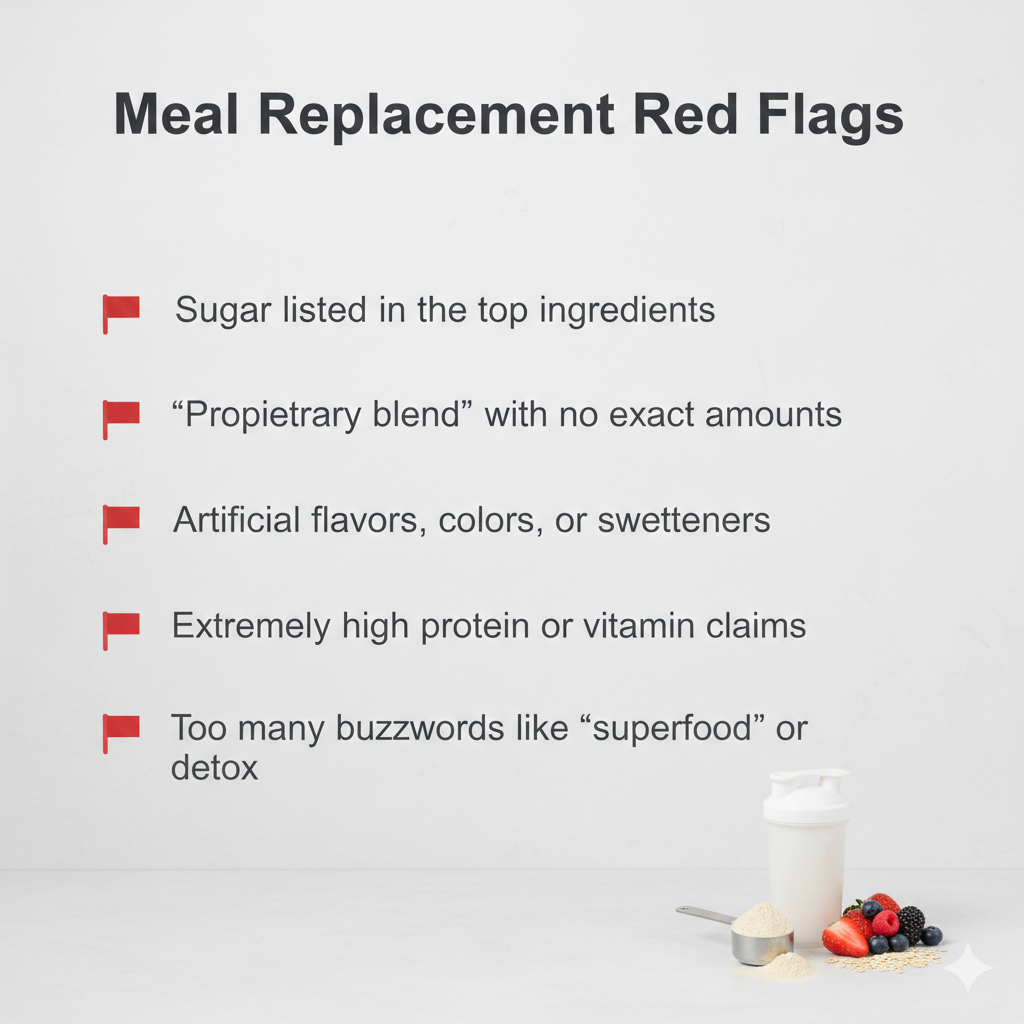
Here’s the problem with most meal replacement shakes: they nail protein, completely ignore fiber, add token amounts of vitamins, and count on you not reading the ingredient list where sugar appears three times under different names.
Red Flags: How to Spot Terrible Meal Replacements
I’ve tried enough bad shakes to recognize patterns. Here’s what to avoid:
The Sugar Trap
Check the nutrition label. If sugar is in the top three ingredients (or disguised as “organic cane juice,” “agave nectar,” “brown rice syrup”), you’re drinking dessert.
One popular brand I tested had 24 grams of sugar per serving. That’s more than a Snickers bar. They marketed it as a “wellness shake.”
Real nutrition doesn’t need that much sugar to taste good. If it does, the base formula is trash and they’re covering it up with sweetness.
The Proprietary Blend Scam
“Proprietary blend of 23 superfoods!”
Translation: “We can’t tell you how much of each ingredient is actually in here, but trust us, it’s amazing.”
No. Proprietary blends hide the fact that there’s maybe 2mg of that exotic Brazilian berry they’re advertising, followed by 2 grams of rice protein.
If a company won’t tell you exact amounts of what’s in their product, they’re hiding something.
The Artificial Everything
Some meal replacements read like a chemistry experiment: artificial flavors, artificial colors, artificial sweeteners, five different preservatives, and texture agents that sound like they belong in industrial applications.
Your gut doesn’t know what to do with this stuff. Neither does mine. Some people handle it fine. Many don’t, and they spend weeks wondering why they feel bloated and gassy all the time.
The “More is Better” Myth
50 grams of protein per serving! 100% of 28 vitamins! 12 different types of fiber!
Your body can only absorb so much at once. Loading everything into one mega-dose doesn’t make it better—it makes it expensive pee.
Balanced means appropriate amounts that your body can actually use, not ridiculous quantities that look impressive on a label.
What Actually Works: The Elements of a Good Meal Replacement
After trying dozens of options, I’ve identified what separates functional meal replacements from expensive failures.
Complete Protein Profile
You need all nine essential amino acids. Plant-based proteins often miss a few, which is why quality plant blends combine multiple sources (pea protein + rice protein, for example).
Animal-based proteins (whey, casein) are complete on their own but come with dairy concerns for some people.
A good shake has 15-25 grams of protein per serving. More isn’t automatically better—your body can only process about 25-30 grams efficiently at once anyway.
Complex Carbohydrates, Not Sugar
Your body needs carbs for energy. But there’s a massive difference between sugar (instant spike, crash 30 minutes later) and complex carbs (steady energy for hours).
Look for oats, quinoa, sweet potato powder, or other whole food carb sources. Avoid anything where sugar provides more than 6-8 grams per serving.
Real Fiber Content
Most meal replacements completely skip fiber or add a token gram. You need 8-12 grams per meal replacement serving.
Why? Because fiber:
- Keeps you full longer
- Stabilizes blood sugar
- Feeds your gut bacteria
- Prevents the digestive issues that plague meal replacement users
If a shake has less than 5 grams of fiber, it’s incomplete.
My Testing Process: What Worked and What Didn’t
I spent six months systematically testing meal replacement shakes. Same protocol for each:
- Mix according to package directions
- Drink for breakfast for one week
- Track energy levels, hunger timing, and digestive response
- Note taste, texture, and mixability
- Check if I’m actually full until lunch or starving at 10 AM
Most failed the hunger test. I’d drink the shake at 7:30 AM and be ravenous by 10:00. That’s not a meal replacement—that’s a snack with delusions of grandeur.
Three passed:
One was dairy-based, tasted amazing, but gave me digestive issues after three days. Turns out my lactose tolerance isn’t as good as I thought.
Another was plant-based, worked great nutritionally, but mixing it was like wrestling mud. Even with a blender, I’d find clumps that hadn’t dissolved. After two weeks of this, I gave up.
The third nailed everything: balanced nutrition, good taste, easy mixing, actually kept me full for 4-5 hours. That’s the standard I’m working from now.
Building a Sustainable Routine (Not a Temporary Diet)
Most people approach meal replacements wrong. They see them as a diet—something temporary you do to fix a problem, then stop once you hit your goal.
That’s backwards.
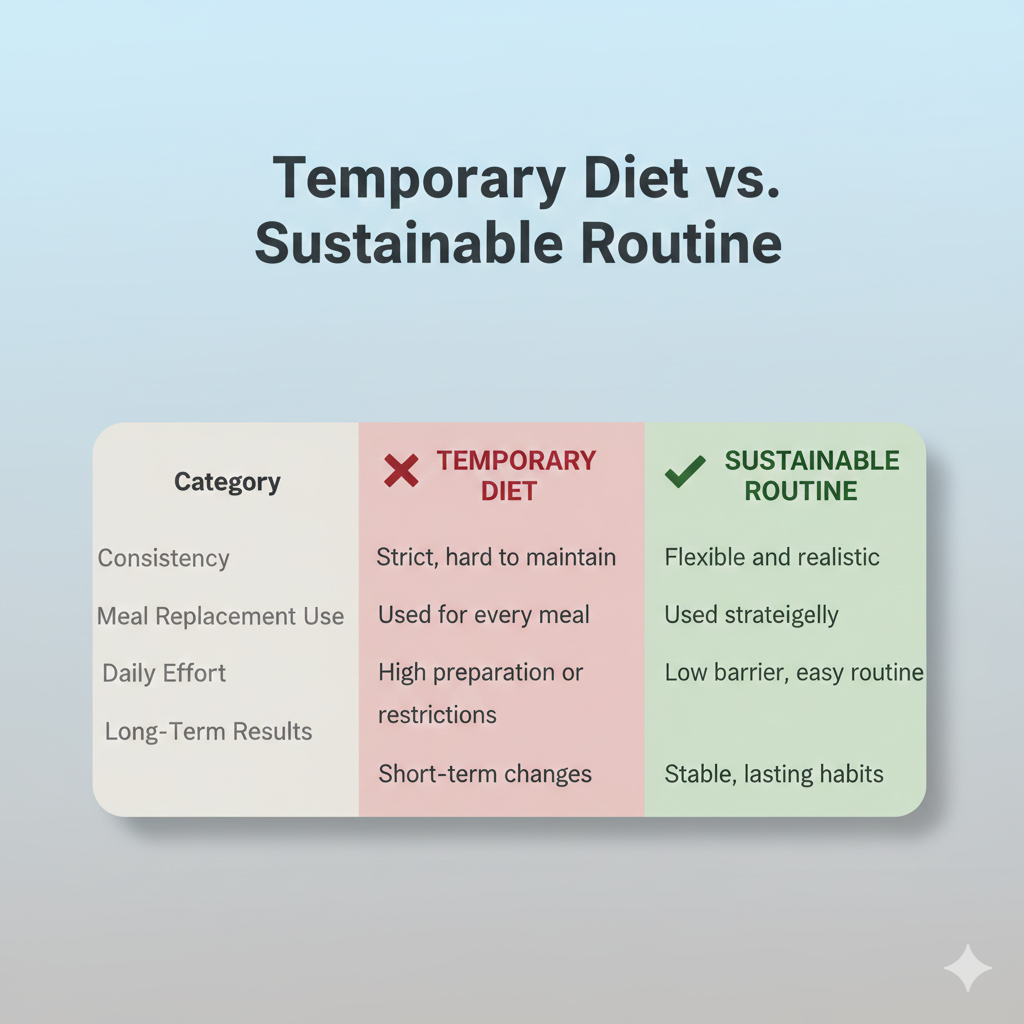
Meal replacements work when they’re part of a sustainable routine that fits your actual life. Not the life you wish you had, where you prep beautiful meals every day and never get stressed or busy. Your real life.
Here’s what works:
Use them strategically, not exclusively. I use meal replacements for breakfast five days a week. I cook breakfast on weekends because I have time and enjoy it. Lunch and dinner are normal food.
Keep the barrier to entry low. If mixing your shake requires getting out the blender, measuring three different ingredients, and cleaning multiple containers, you won’t do it when you’re running late. I keep pre-portioned servings and a shaker bottle ready to grab.
Have backup options. Some mornings I want a shake. Some mornings I want eggs. Having both options available means I’m more likely to eat something good instead of grabbing fast food because I’m out of my preferred breakfast.
Track how you actually feel. Are you hungry two hours later? Are you energized or sluggish? Is your digestion happy or angry? Your body gives you all the feedback you need—listen to it.
The Digital Side: Research, Reviews, and Privacy
When you’re researching meal replacements, you’re probably creating accounts on multiple websites, signing up for newsletters, and providing your email to a dozen companies.
Six months later, you’re getting marketing emails from companies you don’t remember contacting. Your inbox is full of “exclusive offers” and “can we get your feedback?” messages from brands you tried once and never reordered.
Here’s what I do differently now:
Use a disposal email for initial research. When I’m comparing products and signing up for information, I don’t use my main email.
This keeps your primary inbox clean and gives you control. Once you’ve decided which product you actually want to order regularly, then use your real email for the actual purchase and account.
Take screenshots of claims and pricing. Companies change their websites constantly. That “satisfaction guarantee” might disappear. That “$29.99 per container” might become “$39.99” next month. I screenshot product pages before purchasing so I have records.
Read independent reviews, not just the company’s testimonials. Obvious, but worth repeating. Company testimonials are selected marketing material. Reddit threads, YouTube reviews from real users, and blog posts from people who bought with their own money give you actual experiences.
Don’t fall for the free trial trap. “Just pay $4.95 shipping for a free sample!” often means you’re auto-enrolled in a $89/month subscription. Read everything before clicking buy.
When Meal Replacements Aren’t the Answer
I need to be clear about something: meal replacements solve specific problems, but they’re not universal solutions.
Don’t use meal replacements if:
You have an eating disorder or history of restrictive eating. Meal replacements can become tools for unhealthy restriction. If this applies to you, work with a therapist and registered dietitian, not a shake.
You’re trying to “detox” or do a juice cleanse. Your liver and kidneys handle detox. You don’t need special shakes for this. If someone claims their shake detoxifies you, they’re selling pseudoscience.
You have specific medical conditions without doctor approval. If you have diabetes, kidney disease, or other conditions that require carefully managed nutrition, talk to your doctor before adding meal replacements.
You’re pregnant or breastfeeding. Your nutritional needs are specific and critical. Get guidance from your healthcare provider, not internet articles (including this one).
Do consider meal replacements if:
You skip meals because you’re too busy and then overeat later because you’re starving.
You eat fast food for convenience more often than you’d like and want a healthier quick option.
You travel frequently and need consistent nutrition options that don’t depend on finding good restaurants.
You have legitimate time constraints that make cooking three meals daily unrealistic.
Making It Actually Work Long-Term
The difference between meal replacements that become part of your life and meal replacements that end up gathering dust in your pantry comes down to integration.
Integration tips that worked for me:
Keep your supplies visible and accessible. I have a shelf in my kitchen with my meal replacement container, a shaker bottle, and a measuring scoop. If I had to dig through cabinets every morning, I wouldn’t use it.
Batch prep your add-ins if you like variety. I freeze banana slices and berries in individual portions. Grab a portion, blend with the shake, done. Takes an extra 45 seconds but makes it feel less monotonous.
Have realistic expectations about taste. It’s food. Functional food. It doesn’t need to be the highlight of your day. It needs to fuel your body so you can get to the parts of your day that actually matter.
Track how much money you’re saving versus your previous eating patterns. I was spending $8-12 per day on breakfast (coffee shop pastry plus coffee). My meal replacement costs $2.50 per serving. That’s $5.50-9.50 saved daily, or $1,650-2,850 per year. That buys a lot of things I actually care about.
Your Next Steps: Building Your Own System
If you’re convinced meal replacements might help your nutrition situation, here’s how to start without wasting money on products that won’t work:
Step 1: Identify your actual need. Are you skipping breakfast? Eating terrible lunches? Just wanting a backup option for busy days? Get specific about what problem you’re solving.
Step 2: Check your constraints. Dairy-free? Plant-based? Have digestive sensitivities? Low-carb? The more specific you are about your requirements, the easier it is to narrow down options.
Step 3: Buy single containers of 2-3 options. Don’t subscribe to anything yet. Get small quantities of a few products that seem promising.
Step 4: Test systematically. Use each one for at least 5 days straight. Track how you feel: energy levels, hunger patterns, digestive response, taste fatigue.
Step 5: Pick one and commit for a month. Once you find something that works, use it consistently enough to establish a routine. A month is long enough to know if it’s genuinely working or just novelty.
Step 6: Adjust as needed. Maybe you need it daily. Maybe three times a week. Maybe just as backup for chaotic mornings. Build the system around your actual life.
The Bottom Line: Convenience Doesn’t Mean Compromise
For years, people treated “convenient nutrition” as an oxymoron. If it was quick and easy, it couldn’t be healthy. If it was healthy, it required shopping at farmers markets, prepping ingredients, and cooking from scratch.
That’s changing. Good meal replacement blends prove you can have both—proper nutrition and minimal time investment—without compromising either direction.
The key is being smart about what you choose. Read labels carefully. Ignore marketing claims. Test products for yourself. Build systems that fit your actual life.
I still love cooking when I have time. I still eat at restaurants. I still have lazy weekend breakfasts with eggs and toast.
But having a reliable, nutritious, quick option for the 60% of mornings when I’m rushed or tired or just don’t feel like cooking? That changed everything about how consistently I eat well.
Your version of that might look different. Different products, different timing, different situations where it makes sense.
What matters is that you have options. Real options that work with your body, your schedule, and your life. Not options that sound good in theory but fail in practice.
Start simple. Test what works. Build from there.
Your future self—the one who’s properly fed, not constantly hungry at weird hours, and not feeling guilty about convenience—will thank you for figuring this out.